GenZ Syndrome And The Future Of Speech-Language Development In Children
- Speech and Language Development
- March 12, 2026
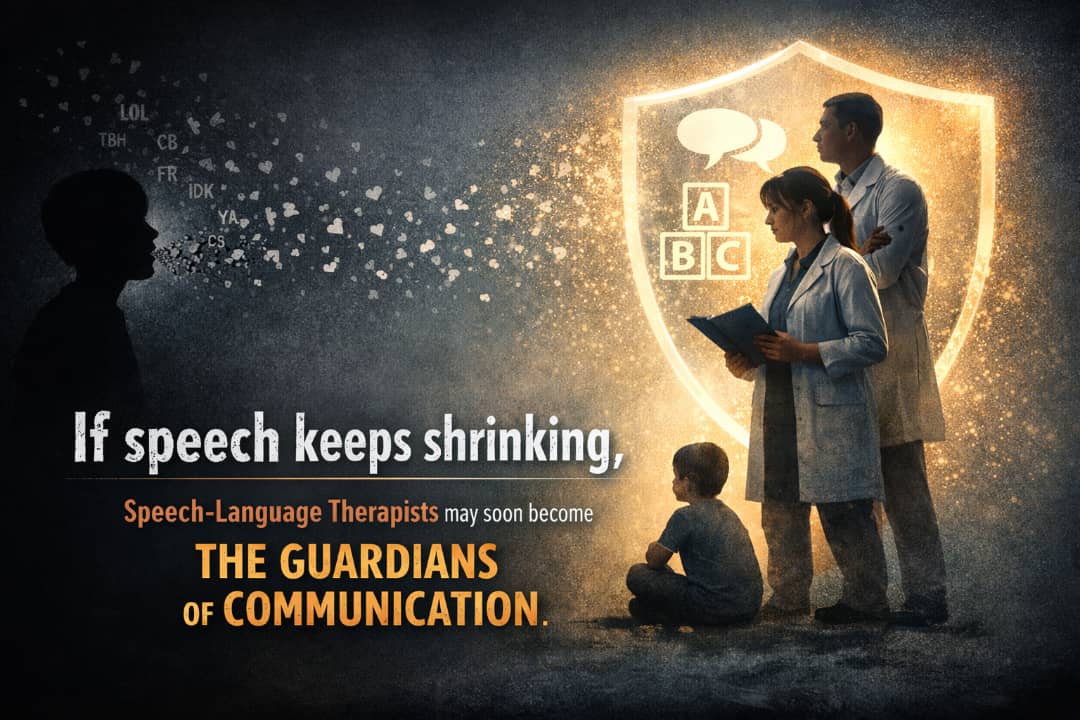
The rate at which speech is fading and becoming nonsensical, Speech-Language Therapists may soon be one protecting what's left of communication for the coming generation.
There's something we are not talking about enough, and that is the gradual loss of speech among the GenZ.
And no, this is not a referral to speech disorders in the traditional clinical sense. Rather, It's about how everyday communication is slowly fading.
Complete sentences are disappearing. Words are being replaced with fragments. Language is being compressed into two or three letters.
"Sus.”“Fr.”“Wyd"“Lmao" "it's giving"
What's concerning is that abbreviations are beginning to replace expression. Maybe you don't know, speech and language are not just tools for talking. They are the foundation of:
- thinking
- comprehension
- storytelling
- social interaction
- learning
When language becomes excessively simplified, our vocabulary, expressive ability, and depth of communication begins to fade.
👉 𝗡𝗼𝘄 𝗶𝗺𝗮𝗴𝗶𝗻𝗲 𝘁𝗵𝗲 𝗿𝗶𝗽𝗽𝗹𝗲 𝗲𝗳𝗳𝗲𝗰𝘁:
Children learn language primarily through exposure and modeling. If the language environment around them is constantly abbreviated, what happens to their language development?
We may begin to see:
- delayed expressive language
- reduced vocabulary growth
- difficulty forming complete sentences
- weaker narrative and storytelling skills
- challenges with reading comprehension
And over time, these patterns can start to mimic or contribute to language delays that require professional intervention.
If this trend continues, Speech-Language Therapists may soon be one protecting what's left of communication. Because speech does not disappear overnight. It fades gradually. And sometimes, by the time we notice the loss, a whole generation may already be struggling to find the words.
The GenZ syndrome, should we be bothered?